
Why Independent Testing Matters in Research Settings
In any laboratory or research environment, consistency and purity are foundational. Compounds used in research must meet expected specifications so that results remain reliable and reproducible. When a supplier provides third-party testing, it offers an external data point that can support claims about the material’s composition.
Independent testing removes some of the potential bias that can exist when analysis is performed only in-house. It does not eliminate all questions, but it adds a layer of documentation that many researchers find valuable when comparing sources.
Common Types of Third-Party Analysis
Several analytical methods appear regularly in research peptide documentation. Each provides different information:
HPLC (High-Performance Liquid Chromatography) This technique separates the components of a sample and measures the relative amount of the target compound. Results are typically expressed as a purity percentage. Higher percentages indicate a greater proportion of the intended peptide relative to other detectable substances in the sample.
Mass Spectrometry Mass spectrometry helps confirm the molecular weight of the compound. When the measured mass matches the expected theoretical mass of the peptide, it supports the identity of the material. This step is particularly useful for verifying that the correct sequence or structure is present.
Residual Solvent Testing Some manufacturing processes leave behind trace solvents. Testing for residual solvents can indicate how thoroughly the material has been purified after synthesis.
Endotoxin or Microbial Testing In certain research contexts, the presence of bacterial endotoxins or microbial contamination is relevant. Not every peptide report includes this data, but when it appears, it provides additional insight into handling and production conditions.
What the Reports Typically Show — and What They Don’t
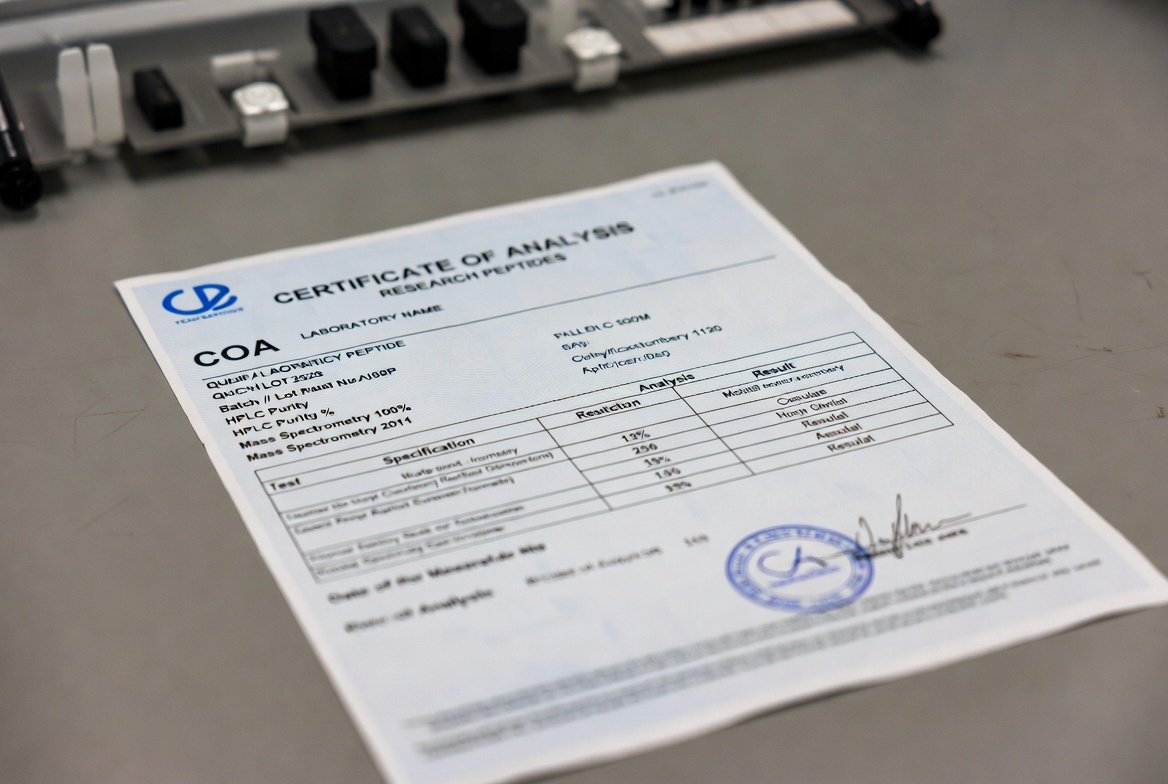
A third-party certificate of analysis (COA) usually includes the test method, the results, the date of analysis, and the laboratory that performed the work. Well-prepared reports also list the batch or lot number so the data can be matched to a specific production run.
What these documents generally do not provide is a complete picture of long-term stability, storage history, or every possible impurity. They represent a snapshot of the material at the time of testing. Researchers who track multiple batches over time often look for consistency across reports rather than relying on a single data point.
Practical Questions Researchers Often Ask
When reviewing testing documentation, experienced researchers tend to examine several details:
- Is the testing laboratory clearly identified and independent?
- Does the report include both purity and identity confirmation?
- Is the batch number listed so results can be tied to a specific lot?
- Are the methods appropriate for the type of compound being analyzed?
- How recently was the testing performed relative to the material’s production date?
These questions help move the evaluation beyond marketing language and into documented characteristics of the material itself.
Building a Consistent Evaluation Process
Many researchers develop a simple checklist for reviewing quality documentation. This may include verifying the testing lab, confirming that both HPLC and mass spectrometry data are present, noting the reported purity range, and checking whether residual solvent or endotoxin results are included when relevant to the research application.
Over time, patterns emerge. Some sources provide detailed, batch-specific reports with clear methodology. Others offer more limited or generic documentation. The difference becomes apparent when materials are compared side by side.
Soft CTA
If you are building a more systematic approach to evaluating research materials, the VitalPepper community is designed to support that process. Registration provides access to curated referral options and ongoing discussions focused on quality standards and sourcing transparency. Join the community to explore these topics with others who prioritize careful evaluation.
FAQ
What does “third-party tested” usually mean? It generally means that an independent laboratory, rather than the supplier’s internal lab, performed analytical testing on a sample of the material and issued a report of the results.
Is higher purity always better? Purity percentages provide useful information, but researchers also consider the full context of the report, including identity confirmation and the presence of other tested parameters.
Should every research peptide come with a COA? Many researchers prefer materials that include recent, batch-specific third-party documentation. Availability of clear testing data is one factor commonly used when comparing sources.
Can testing reports expire? Reports reflect the state of the material at the time of analysis. Older reports may still be informative, but more recent testing is often preferred when available.
What if a supplier only provides in-house testing? In-house data can still offer useful information. Many researchers simply note the difference and weigh it alongside other quality indicators when making comparisons.
Leave a Reply