
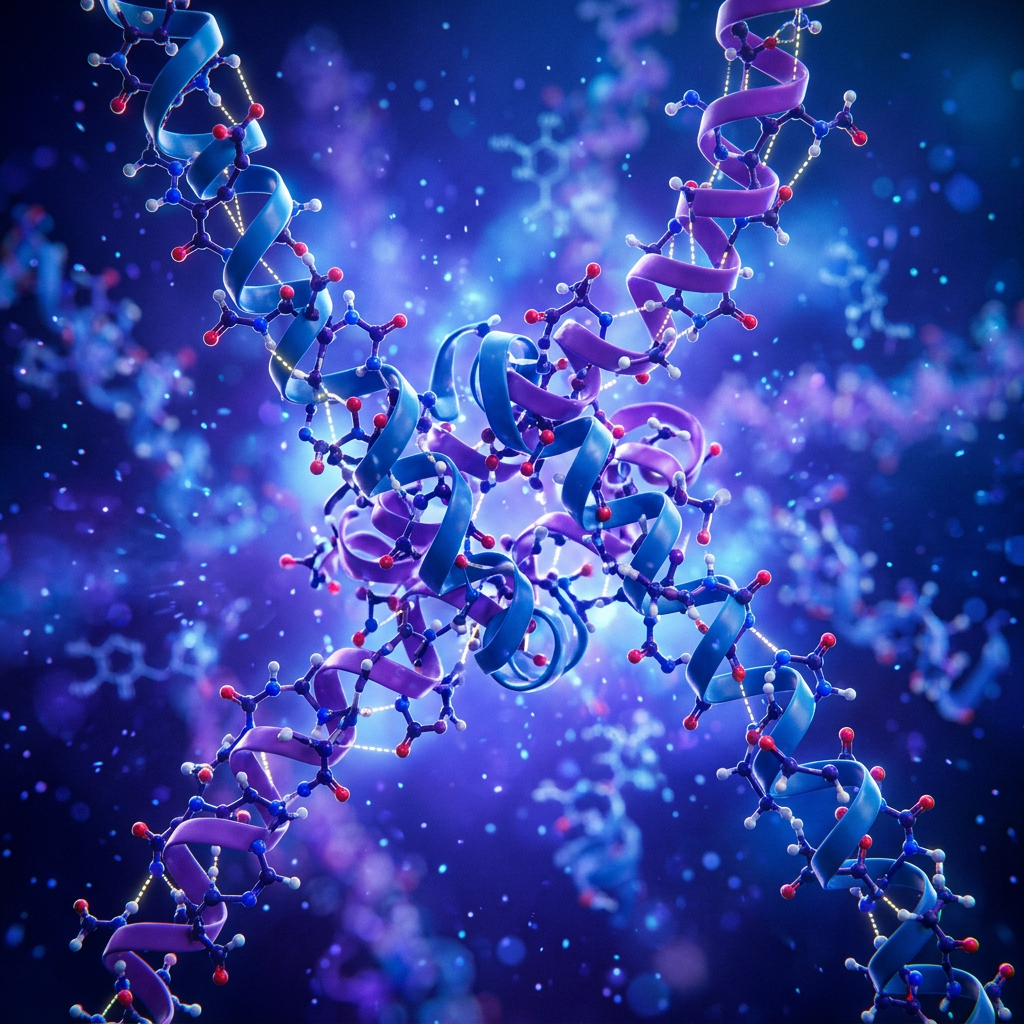
Peptides are short chains of amino acids linked by peptide bonds. Amino acids are the building blocks of proteins; when the chain is relatively short (typically fewer than 50–100 amino acids), scientists classify the molecule as a peptide rather than a full protein.
In living systems, peptides function primarily as signaling molecules. They bind to specific receptors on cell surfaces and influence processes such as hormone release, immune signaling, tissue repair pathways, and metabolic regulation. The body produces many of its own peptides naturally.
Researchers synthesize specific sequences in laboratories to study these pathways under controlled conditions. These research-grade peptides are tools for investigating cellular mechanisms, receptor interactions, and biological responses in cell cultures, animal models, and other experimental systems.
Important distinction: FDA-approved peptide drugs (such as insulin, certain GLP-1 receptor agonists, or oxytocin) have undergone extensive clinical trials and regulatory review for specific medical uses. The majority of peptides discussed in research-supply contexts have not. They remain investigational compounds intended only for laboratory research.
At Vital Pepper, all materials are supplied exclusively for scientific research and laboratory use. They are not intended for human consumption or any therapeutic purpose.
Leave a Reply