
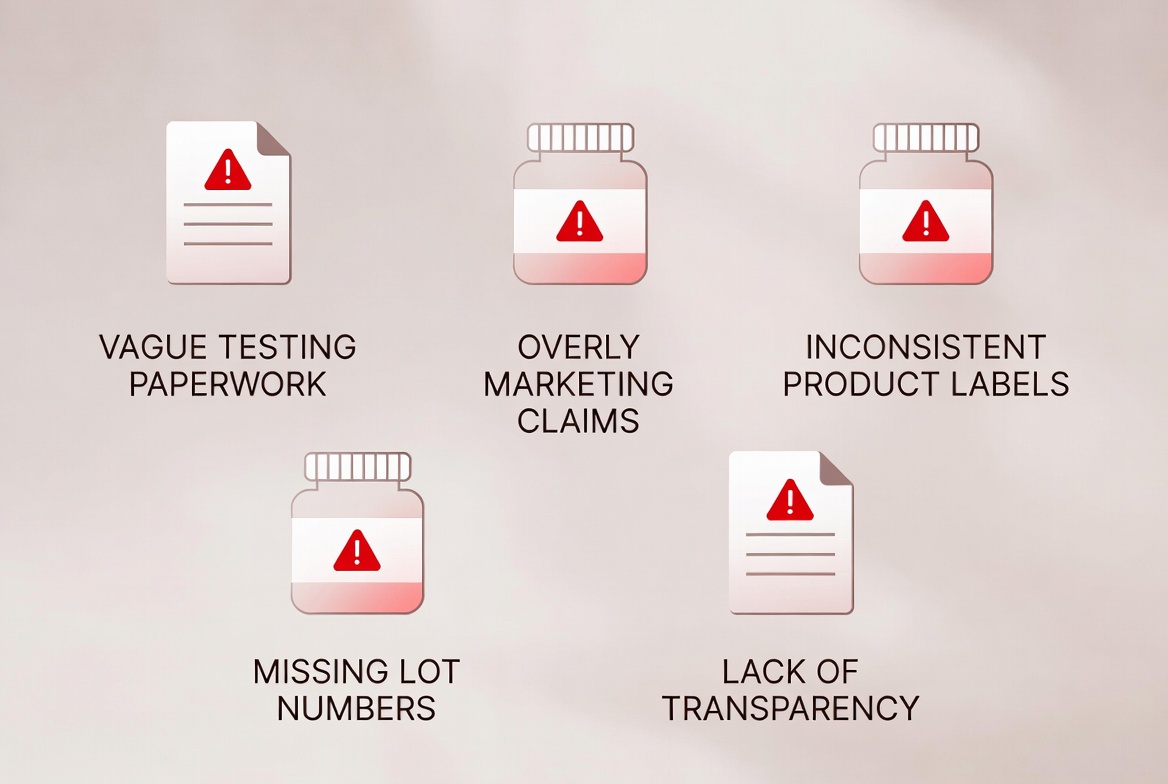
1. Vague or Missing Testing Information
One of the most frequently mentioned concerns is the absence of clear, batch-specific testing data. When a source claims high purity or quality without providing supporting documentation — or offers only generic statements — researchers often pause.
Helpful documentation typically includes the testing method, results, laboratory name, and lot number. When these elements are missing or difficult to locate, it becomes harder to assess the material against objective criteria.
2. Overly Broad or Unverifiable Claims
Language that promises exceptional results, uses superlatives without context, or makes broad statements about superiority can raise questions. In research settings, precise and limited claims tend to align better with scientific communication.
Researchers often prefer sources that focus on measurable attributes — purity ranges, analytical methods, and manufacturing standards — rather than expansive marketing language.
3. Inconsistent or Changing Product Information
When product specifications, purity claims, or testing details shift frequently without explanation, it can create uncertainty. Consistency in documentation across batches is generally viewed as a positive indicator.
Some variation is normal in any manufacturing process. However, large unexplained changes in reported characteristics may prompt additional questions from those tracking materials over time.
4. Lack of Clear Batch or Lot Tracking
Research work often benefits from the ability to reference specific production runs. When materials lack clear lot numbers or when testing reports cannot be matched to a particular batch, traceability becomes limited.
Sources that provide straightforward lot identification and corresponding documentation make it easier for researchers to maintain records and compare materials across different orders.
5. Limited Transparency About Manufacturing or Handling Practices
While full proprietary details are rarely shared, a complete absence of information about synthesis approach, purification steps, or storage recommendations can stand out. Researchers who value process transparency often look for at least high-level descriptions of how materials are produced and handled.
This does not require revealing trade secrets. Simple clarity about quality control steps and recommended storage conditions is often sufficient to demonstrate attention to consistency.
Putting the Red Flags in Context
Noticing one or more of these points does not automatically disqualify a source. Many researchers treat them as signals to ask additional questions or to compare documentation more carefully against other options.
The goal is not perfection. It is developing a practical filter that helps prioritize sources whose practices align with the standards required for reliable research work.
Building Better Evaluation Habits
A simple way to apply these observations is to create a short personal checklist. Before placing an order or recommending a source, review the available testing data, note whether lot numbers are present, examine the language used in product descriptions, and consider how transparent the overall presentation feels.
Over time, this process becomes faster and more intuitive. Patterns that once required deliberate attention begin to stand out more quickly.
Soft CTA
If you are refining your approach to evaluating research materials, the VitalPepper community offers a focused environment for these conversations. Registration gives access to referral options selected with attention to documentation and quality practices. Join the community to continue exploring standards that support careful research work.
FAQ
Are these red flags absolute deal-breakers? They are practical observation points rather than rigid rules. Many researchers use them as part of a broader evaluation rather than as automatic disqualifiers.
What should I look for instead of red flags? Clear batch-specific testing, consistent documentation, restrained language, and basic transparency about quality processes are commonly viewed as positive indicators.
How important is the testing laboratory’s reputation? Independence and clear identification of the laboratory are often considered useful. Some researchers also look at whether the lab is known for analytical work with peptides or similar compounds.
Can a source improve after showing these red flags? Yes. Some suppliers update their documentation practices, add more detailed testing, or improve transparency over time. Checking current materials rather than relying on older impressions is useful.
Is price a reliable quality signal? Price alone provides limited information. Many researchers evaluate documentation and consistency alongside cost when making comparisons.
Leave a Reply